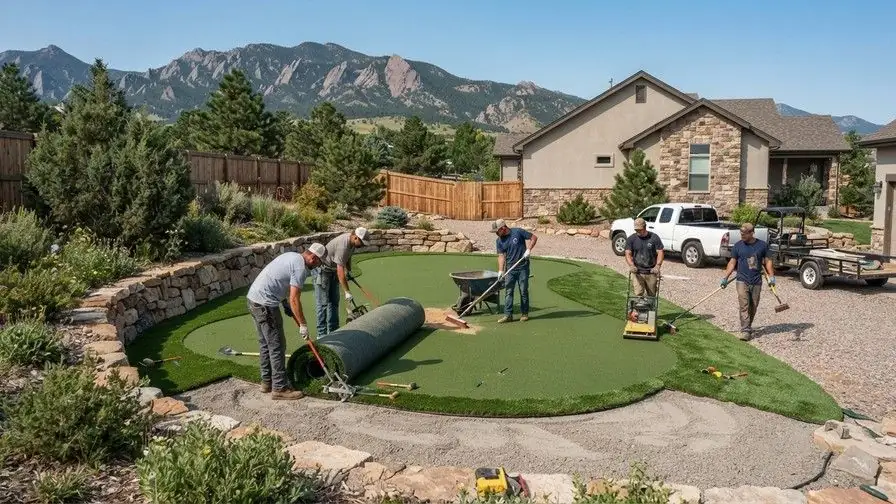
A home putting green is one of the most enjoyable turf projects and one of the most technical. How it rolls depends on decisions made well before the first putt, and on a Golden lot, the existing slope of the yard is part of that picture. If you are picturing a green out back, here is what goes into one and what to ask about.
What goes into a backyard putting green in Golden?
A backyard green sits on a compacted rock base shaped into gentle breaks, topped with dense putting turf and sand infill that sets the speed. Cups are set flush with the surface, and a collar of longer fringe turf usually frames the green. On a sloped Golden yard, some of the natural fall can be shaped into breaks, while steeper ground may need leveling first, and the base must drain snowmelt so the surface stays true. Size and layout follow how you like to practice. A local provider can mark out options and explain how each would play.
Start With How You Practice
Short putts, long lag putts and reading breaks each suit a slightly different green. For drilling three and four footers, a compact green with one or two cups works well, while lag practice depends more on length than width.
Breaks come from contours built into the base. To practice reading putts, ask for gentle slopes running in different directions. A green shaped too aggressively can frustrate more than it entertains, so most backyard greens aim for subtle movement.
Putting Turf and Sand Infill
Putting turf is shorter and denser than landscape turf, typically nylon or polyethylene fibers made for a smooth roll. Products differ in speed and in how they take a chip, so if you plan to chip onto the green, ask for turf that holds a shot.
Sand infill worked into the fibers firms the surface and sets the speed, and more infill plus more brushing generally means a firmer green. The provider can explain how they tune a green and how you can adjust it later.
Setting Cups and Fringe
Where the cups go decides how the green plays. Spreading them across different slopes gives more variety from one surface. Cups sit in sleeves set into the base so they stay level, and flags lift out when you want a clean look.
A collar of taller fringe turf outlines the green, slows putts that run off and ties it into the rest of the yard. Some owners add a small chipping spot or tee mat close by, and planning those additions early keeps the layout working as one.
From Sketch to First Putt
Think about where the green would go, how big it should be and how you like to practice, since those answers guide the design. When you are ready, we can put you in touch with an independent provider who covers Golden who builds backyard putting greens.