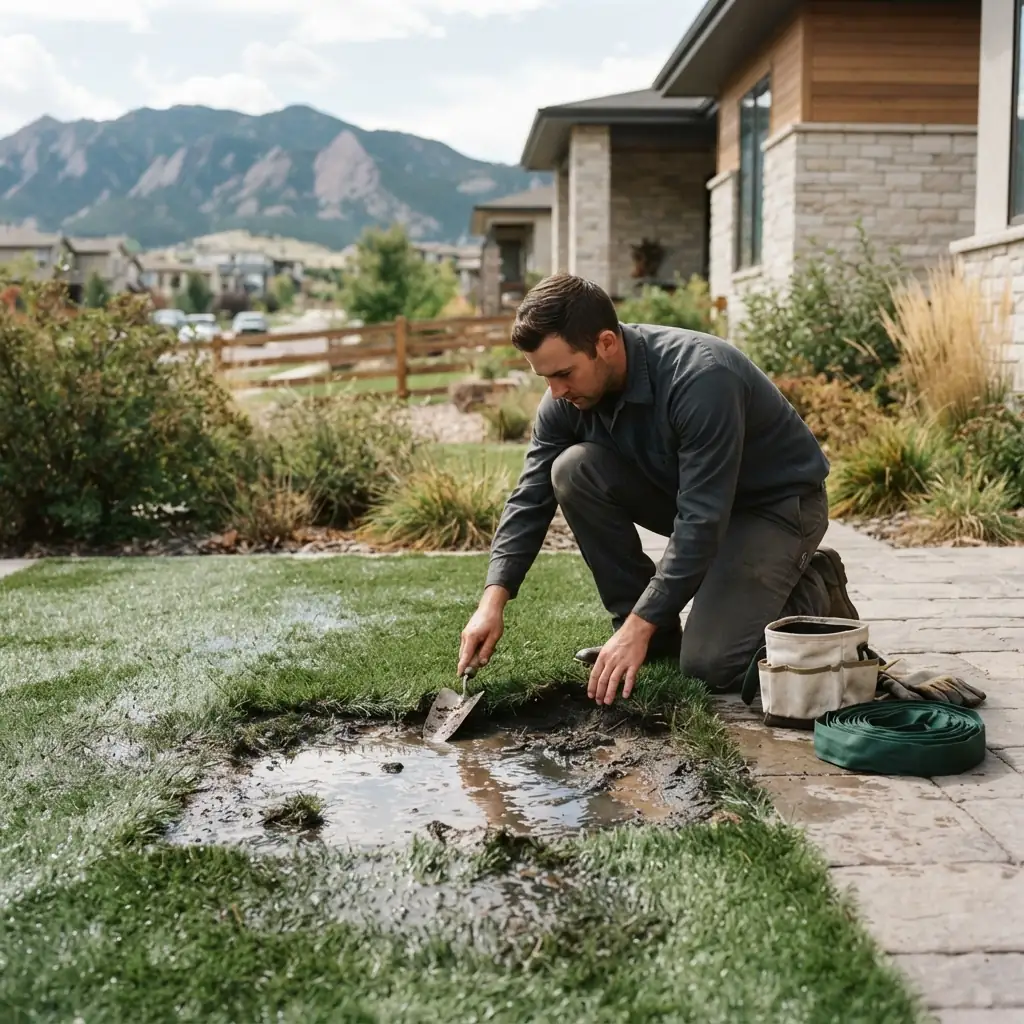
Turf that went in right should shed rain and snowmelt without leaving puddles. Water sitting on top or a corner that stays wet for days means something underneath needs attention. We pair Golden homeowners with an independent turf provider close by who can find the cause and recommend a repair.
Where Pooling Usually Starts
Base rock that was compacted unevenly can sink over time and leave dips that collect water. Turf over clay with too little crushed rock under it may drain slowly, and edges set a bit higher than the yard can hold water in instead of letting it run off.
Water from elsewhere matters as well. A downspout pointed at the turf, a sprinkler zone that was never capped or an uphill neighbor's yard draining toward yours can deliver more than the base can handle.
Tracking Down the Cause
Providers usually begin by watching where water travels during a hose test or after a storm. They look at the yard's grade, the condition of the edges and the location of downspouts and sprinkler heads. Pulling back a section of turf near the trouble spot shows whether the base has sunk or the backing is clogged.
With that, they can tell you whether the answer is a spot base repair, regrading part of the yard or an added drain such as a gravel trench or a longer downspout.
Typical Repairs
Small dips are often fixed by folding the turf back, adding and compacting base rock, then reattaching the turf and brushing infill back in. Bigger problems may need a section regraded to fall away from the house, or a perforated pipe or gravel channel installed to carry water off.
Drainage repairs rarely require new turf. When the turf is still in good condition, it can usually be lifted, the base corrected and the same turf laid back down.
Ask for a Drainage Check
Describe where water gathers, how long it stays after a storm and whether downspouts or sprinklers drain toward the turf. We send the details to an independent turf provider who covers Golden, who will set up a visit and quote any repair.